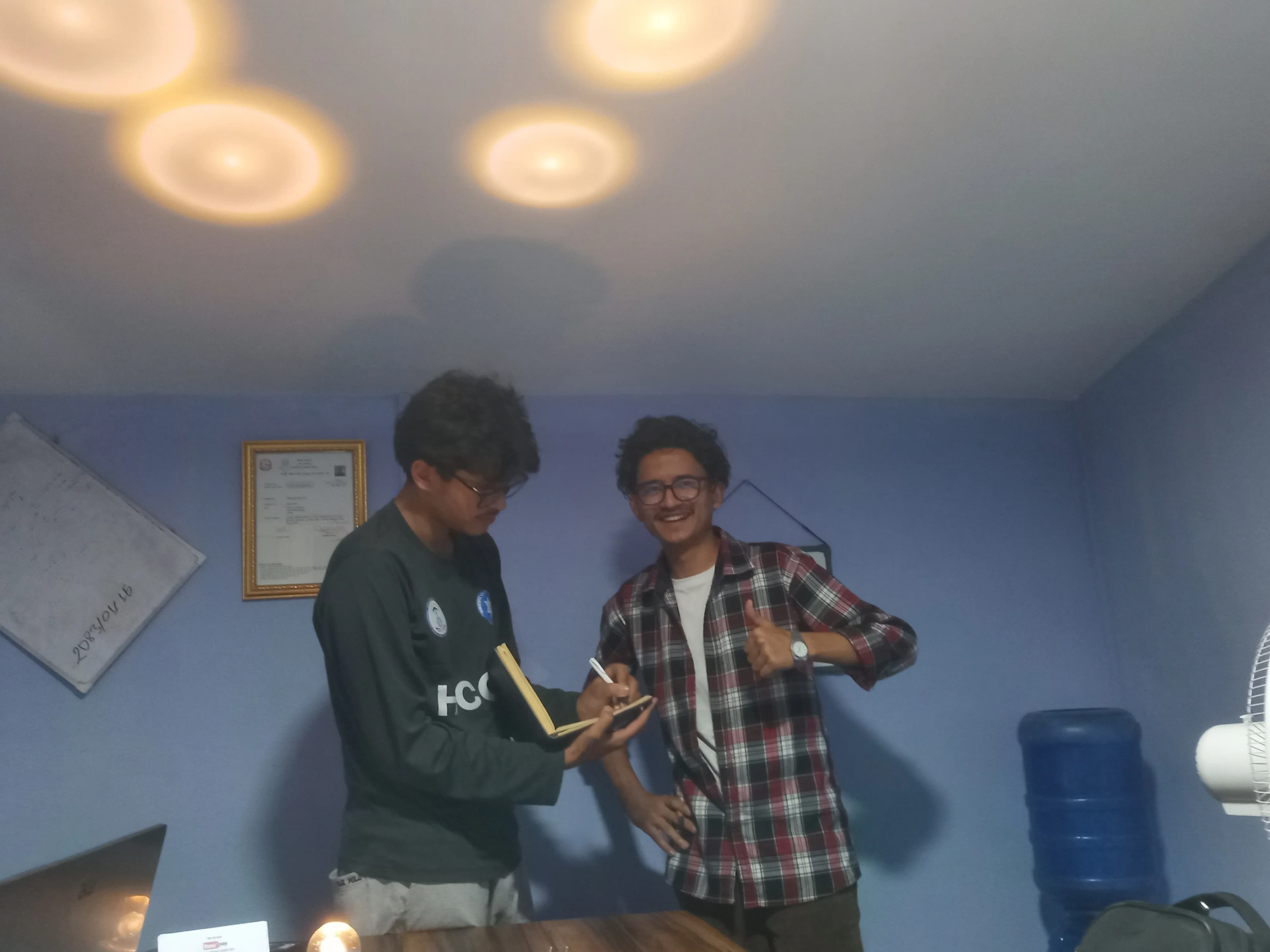
At a family gathering last year, a relative asked me what I do.
I said I run a tech and creative agency.
He nodded slowly. The kind of nod that means nothing registered but he didn't want to ask again.
Then he asked if I could fix his printer.
This is the Nepal founder experience in its purest form.
The country has a very clear mental map of acceptable careers. Doctor. Engineer. Bank job. Government job. Foreign employment. These are the slots. You fit into one of them or you spend the rest of your life explaining yourself at family dinners.
"Agency" doesn't fit into a slot. Neither does "media platform" or "SaaS product" or "digital studio." These are not concepts that have entered the mainstream vocabulary yet. You say them and people hear sounds.
So you simplify. You compress years of work and thought into something a 55-year-old uncle can process in under ten seconds. You watch the concept flatten. You smile and move on.
The funny thing is, the explaining doesn't stop with family.
It extends to clients. To collaborators. To potential hires. To people who should theoretically understand this world but have absorbed enough Nepali business culture that they still expect a physical office, a registered trade name that sounds like a law firm, and someone with gray hair in charge.
You're 21. You work from a laptop. You have three ventures and none of them have a reception desk.
This is suspicious to people.
But here's the part I didn't expect.
Some of the explaining is for me.
Running multiple things at once means your own identity gets blurry. Are you a developer? A creative director? A founder? A freelancer with branding? A media person? All of these are true some days and none of them feel complete.
You introduce yourself differently depending on who's asking. Not dishonestly, just contextually. The version of you that walks into a meeting with a corporate client is not the same version that pitches a product to investors is not the same version that briefs a design team at midnight.
And somewhere in all those versions, the actual you, the one that started this because of a specific thing you wanted to build; can get a little lost.
I think this is the specific tax that Nepal charges ambitious people.
You don't just have to do the work. You have to constantly justify the category of work. You have to fight the gravitational pull of conventional paths not just once when you choose, but every single time someone asks what you do.
It's tiring in a way that's hard to explain to people who just said "software engineer" and watched all the questions stop.
There's no clean resolution here.
The relatives still think I work in computers. That's fine. I've made peace with the nod.
What I'm still working on is the internal version of the problem, the ability to explain what I'm building clearly enough that I can hear it back and feel like it's true. Not the elevator pitch version. The actual one.
The work is figuring out what you're doing. The Nepal part is just explaining it to everyone else while you figure it out.
Both are ongoing.